A professional network service (or, in an Internet context, simply a professional network) is a type of social network service that focuses on interactions and relationships for business opportunities and career growth, with less emphasis on activities in personal life. A professional network service is used by working individuals, job-seekers, and businesses to establish and maintain professional contacts, to find work or hire employees, share professional achievements, sell or promote services, and stay up-to-date with industry news and trends. According to LinkedIn managing director Clifford Rosenberg in an interview with AAP in 2010, "[t]his is a call to action for professionals to re-address their use of social networks and begin to reap as many rewards from networking professionally as they do personally." Businesses mostly depend on resources and information outside the company and to get what they need, they need to reach out and professionally network with others, such as employees or clients as well as potential opportunities. "Nardi, Whittaker, and Schwarz (2002) point out three main tasks that they believe networkers need to attend to keep a successful professional (intentional) network: building a network, maintaining the network, and activating selected contacts. They stress that networkers need to continue to add new contacts to their network to access as many resources as possible and to maintain their network by staying in touch with their contacts. This is so that the contacts are easy to activate when the networker has work that needs to be done." By using a professional network service, businesses can keep all of their networks up-to-date, and in order, and helps figure out the best way to efficiently get in touch with each of them. A service that can do all that helps relieve some of the stress when trying to get things done. Not all professional network services are online sites that help promote a business. Some services connect the user to other services that help promote the business other than online sites, such as phone/Internet companies that provide services and companies that specifically are designed to do all of the promoting, online and in person, for a business. == History == In 1997, professional network services started up throughout the world and continue to grow. The first recognizable site to combine all features, such as creating profiles, adding friends, and searching for friends, was SixDegrees.com. According to Boyd and Ellison's article, "Social Network Sites: Definition, History, and Scholarship", from 1997 to 2001, several community tools began supporting various combinations of profiles and publicly articulated Friends. Boyd and Ellison go on to say that the next wave began with Ryze.com in 2001. It was introduced as a new way "to help people leverage their business networks". == Inside the works == Quite a lot of work is put into a professional network service, such as the number of hours that go into them and the type of people they work for, as well as the business model of it all, such as the professional interaction and the multiple services they deal with. === Types of services === Some professional network services not only help promote the business but can also help in connecting to other people. Those services may include a specific phone and/or Internet company or a company that helps to connect with other businesses. According to the Society for New Communications Research (SNCR), there are at least nine online professional networks that are being used. === Professional interaction === Kaplan and Haenlein elaborate on five key considerations for companies when utilizing media. These include the importance of careful selection, the option to choose existing applications or develop custom ones, ensuring alignment with organizational activities, integrating a comprehensive media plan, and providing accessibility to all stakeholders. ==== Choose carefully ==== "Choosing the right medium for any given purpose depends on the target group to be reached and the message to be communicated. On one hand, each Social Media application usually attracts a certain group of people, and firms should be active wherever their customers are present. On the other hand, there may be situations whereby certain features are necessary to ensure effective communication, and these features are only offered by one specific application." ==== Ensure activity alignment ==== "Sometimes you may decide to rely on various Social Media, or a set of different applications within the same group, to have the largest possible reach." "Using different contact channels can be a worthwhile and profitable strategy." According to the Society for New Communications Research at Harvard University, "the average professional belongs to 3–5 online networks for business use, and LinkedIn, Facebook, and Twitter are among the top used." ==== Integrate a media plan ==== Social media and traditional media are "both part of the same: your corporate image" in the customers' eyes. ==== Allow access to all ==== "...once the firm has decided to utilize Social Media applications, it is worth checking that all employees may access them." According to the SNCR, "the convergence of Internet, mobile, and social media has taken significant shape as professionals rely on anywhere access to information, relationships, and networks." ==== Online usage ==== "Half of the respondents report participating in 3 to 5 online professional networks. Another three in ten participate in 6 or more professional networks." "Popular social networks are now being used frequently as Professional Communities. More than nine in ten respondents indicated that they use LinkedIn and half reported using Facebook. Twitter and blogs were frequently listed as 'professional networks'." === Business model === According to Michael Rappa's article, Business models on the Web", "a business model is the method of doing business by which a company can sustain itself – that is, generate revenue. The business model spells out how a company makes money by specifying where it is positioned in the value chain." Rappa mentions that there are at least nine basic categories from which a business model can be separated. Those categories are a brokerage, advertising, infomediary, merchant, manufacturer, affiliate, community, subscription, and utility. "...a firm may combine several different models as part of its overall Internet business strategy." At first, Flickr started as a way to mainstream public relations. == Social impact == When it comes to the social impact that professional network services have on today's society, it has proved to increase activity. According to the SNCR, "[t]hree quarters of respondents rely on professional networks to support business decisions. Reliance has increased for essentially all respondents over the past three years. Younger (20–35) and older professionals (55+) are more active users of social tools than middle-aged professionals. More people are collaborating outside their company wall than within their organizational intranet." == Limitations == Since the internet and social media are a part of this "world where consumers can speak so freely with each other and businesses have increasingly less control over the information available about them in cyberspace", most firms and businesses are uncomfortable with all the freedom. According to Kaplan and Haenlein's article, "Users of the world, unite! The challenges and opportunities of Social Media", businesses are pushed aside and are only able to sit back and watch as their customers publicly post comments, which may or may not be well-written.
Capture the flag (cybersecurity)
In computer security, Capture the Flag (CTF) is an exercise in which participants attempt to find text strings, called "flags", which are secretly hidden in purposefully vulnerable programs or websites. They can be used for both competitive or educational purposes. In two main variations of CTFs, participants either steal flags from other participants (attack/defense-style CTFs) or from organizers (jeopardy-style challenges). A mixed competition combines these two styles. Competitions can include hiding flags in hardware devices, they can be both online or in-person, and can be advanced or entry-level. The game is inspired by the traditional outdoor sport with the same name. CTFs are used as a tool for developing and refining cybersecurity skills, making them popular in both professional and academic settings. == Overview == Capture the Flag (CTF) is a cybersecurity competition that is used to test and develop computer security skills. It was first developed in 1996 at DEF CON, the largest cybersecurity conference in the United States which is hosted annually in Las Vegas, Nevada. The conference hosts a weekend of cybersecurity competitions, including their flagship CTF. Two popular CTF formats are jeopardy and attack-defense. Both formats test participant’s knowledge in cybersecurity, but differ in objective. In the Jeopardy format, participating teams must complete as many challenges of varying point values from a various categories such as cryptography, web exploitation, and reverse engineering. In the attack-defense format, competing teams must defend their vulnerable computer systems while attacking their opponent's systems. The exercise involves a diverse array of tasks, including exploitation and cracking passwords, but there is little evidence showing how these tasks translate into cybersecurity knowledge held by security experts. Recent research has shown that the Capture the Flag tasks mainly covered technical knowledge but lacked social topics like social engineering and awareness on cybersecurity. == Educational applications == CTFs have been shown to be an effective way to improve cybersecurity education through gamification. There are many examples of CTFs designed to teach cybersecurity skills to a wide variety of audiences, including PicoCTF, organized by the Carnegie Mellon CyLab, which is oriented towards high school students, and Arizona State University supported pwn.college. Beyond educational CTF events and resources, CTFs has been shown to be a highly effective way to instill cybersecurity concepts in the classroom. CTFs have been included in undergraduate computer science classes such as Introduction to Information Security at the National University of Singapore. CTFs are also popular in military academies. They are often included as part of the curriculum for cybersecurity courses, with the NSA organized Cyber Exercise culminating in a CTF competition between the US service academies and military colleges. == Competitions == Many CTF organizers register their competition with the CTFtime platform. This allows the tracking of the position of teams over time and across competitions. These include "Plaid Parliament of Pwning", "More Smoked Leet Chicken", "Dragon Sector", "dcua", "Eat, Sleep, Pwn, Repeat", "perfect blue", "organizers" and "Blue Water". Overall the "Plaid Parliament of Pwning" and "Dragon Sector" have both placed first worldwide the most with three times each. === Community competitions === Every year there are dozens of CTFs organized in a variety of formats. Many CTFs are associated with cybersecurity conferences such as DEF CON, various editions of SANS Institute's NetWars, HITCON, and BSides. The DEF CON CTF, an attack-defence CTF, is notable for being one of the oldest CTF competitions to exist, and has been variously referred to as the "World Series", "Superbowl", and "Olympics", of hacking by media outlets. The NYU Tandon hosted Cybersecurity Awareness Worldwide (CSAW) CTF is one of the largest open-entry competitions for students learning cybersecurity from around the world. In 2021, it hosted over 1200 teams during the qualification round. In addition to conference organized CTFs, many CTF clubs and teams organize CTF competitions. Many CTF clubs and teams are associated with universities, such as the CMU associated Plaid Parliament of Pwning, which hosts PlaidCTF, and the ASU associated Shellphish. Some community CTFs are online and open to all participants. The SANS Institute Holiday Hack Challenge and TryHackMe Advent of Cyber. === Government-supported competitions === Governmentally supported CTF competitions include the DARPA Cyber Grand Challenge and ENISA European Cybersecurity Challenge. In 2023, the US Space Force-sponsored Hack-a-Sat CTF competition included, for the first time, a live orbital satellite for participants to exploit. === Corporate-supported competitions === Corporations and other organizations sometimes use CTFs as a training or evaluation exercise, with benefits similar to those in educational settings. In addition to internal CTF exercises, some corporations such as Google and Tencent host publicly accessible CTF competitions. == In popular culture == In Mr. Robot, a qualification round for the DEF CON CTF competition is depicted in the season 3 opener "eps3.0_power-saver-mode.h". The logo for DEF CON can be seen in the background. In The Undeclared War, a CTF is depicted in the opening scene of the series as a recruitment exercise used by GCHQ. Go Go Squid!, a Chinese television series, is based around training for and competing in highly stylized CTF competitions .
List of operating systems
This is a list of operating systems. Computer operating systems can be categorized by technology, ownership, licensing, working state, usage, and by many other characteristics. In practice, many of these groupings may overlap. Criteria for inclusion is notability, as shown either through an existing Wikipedia article or citation to a reliable source. == Proprietary == === Acorn Computers === Arthur ARX MOS RISC iX RISC OS === Amazon === Fire OS === Amiga Inc. === AmigaOS AmigaOS 1.0-3.9 (Motorola 68000) AmigaOS 4 (PowerPC) Amiga Unix (a.k.a. Amix) === Amstrad === AMSDOS Contiki CP/M 2.2 CP/M Plus SymbOS === Apple === Apple II Apple DOS Apple Pascal ProDOS GS/OS GNO/ME Contiki Apple III Apple SOS Apple Lisa Mac Classic Mac OS A/UX (UNIX System V with BSD extensions) Copland MkLinux Pink Rhapsody macOS (formerly Mac OS X and OS X) macOS Server (formerly Mac OS X Server and OS X Server) Apple Network Server IBM AIX (Apple-customized) Apple MessagePad Newton OS iPhone and iPod Touch iOS (formerly iPhone OS) iPad iPadOS Apple Watch watchOS Apple TV tvOS Embedded operating systems bridgeOS Apple Vision Pro visionOS Embedded operating systems A/ROSE iPod software (unnamed embedded OS for iPod) Unnamed NetBSD variant for Airport Extreme and Time Capsule === Apollo Computer, Hewlett-Packard === Domain/OS – One of the first network-based systems. Run on Apollo/Domain hardware. Later bought by Hewlett-Packard. === Atari === Atari DOS (for 8-bit computers) Atari TOS Atari MultiTOS Contiki (for 8-bit, ST, Portfolio) === BAE Systems === XTS-400 === Be Inc. === BeOS BeIA BeOS r5.1d0 magnussoft ZETA (based on BeOS r5.1d0 source code, developed by yellowTAB) === Bell Labs === Unix ("Ken's new system," for its creator (Ken Thompson), officially Unics and then Unix, the prototypic operating system created in Bell Labs in 1969 that formed the basis for the Unix family of operating systems) UNIX Time-Sharing System v1 UNIX Time-Sharing System v2 UNIX Time-Sharing System v3 UNIX Time-Sharing System v4 UNIX Time-Sharing System v5 UNIX Time-Sharing System v6 MINI-UNIX PWB/UNIX USG CB Unix UNIX Time-Sharing System v7 (It is from Version 7 Unix (and, to an extent, its descendants listed below) that almost all Unix-based and Unix-like operating systems descend.) Unix System III Unix System IV Unix System V Unix System V Releases 2.0, 3.0, 3.2, 4.0, and 4.2 UNIX Time-Sharing System v8 UNIX Time-Sharing System v9 UNIX Time-Sharing System v10 Non-Unix Operating Systems: BESYS Plan 9 from Bell Labs Inferno === Burroughs Corporation, Unisys === Burroughs MCP === CII === Siris 8 === Commodore International === GEOS AmigaOS AROS Research Operating System === Control Data Corporation === ==== Lower 3000 series ==== SCOPE (Supervisory Control Of Program Execution) ==== Upper 3000 series ==== SCOPE (Supervisory Control Of Program Execution) Drum SCOPE ==== 6x00 and related Cyber ==== Chippewa Operating System (COS) MACE (Mansfield and Cahlander Executive) Kronos (Kronographic OS) NOS (Network Operating System) NOS/VE (NOS Virtual Environment) SCOPE (Supervisory Control Of Program Execution) NOS/BE NOS Batch Environment SIPROS (Simultaneous Processing Operating System) ==== Star-100 ==== Multiple Console Time Sharing System (MCTS), from General Motors Research === CloudMosa === Puffin OS === Convergent Technologies === Convergent Technologies Operating System (CTOS) – later acquired by Unisys === Cromemco === Cromemco DOS (CDOS) – a Disk Operating system compatible with CP/M Cromix – a multitasking, multi-user, Unix-like OS for Cromemco microcomputers with Z80A and/or 68000 CPU === Data General === AOS for 16-bit Data General Eclipse computers and AOS/VS for 32-bit (MV series) Eclipses, MP/AOS for microNOVA-based computers DG/UX RDOS Real-time Disk Operating System, with variants: RTOS and DOS (not related to PC DOS, MS-DOS etc.) === Datapoint === CTOS Cassette Tape Operating System for the Datapoint 2200 DOS Disk Operating System for the Datapoint 2200, 5500, and 1100 === DDC-I, Inc. === Deos – Time & Space Partitioned RTOS, Certified to DO-178B, Level A since 1998 HeartOS – POSIX-based Hard Real-Time Operating System === Digital Research, Inc. === CP/M CP/M CP/M for Intel 8080/8085 and Zilog Z80 Personal CP/M, a refinement of CP/M CP/M Plus with BDOS 3.0 CP/M-68K CP/M for Motorola 68000 CP/M-8000 CP/M for Zilog Z8000 CP/M-86 CP/M for Intel 8088/8086 CP/M-86 Plus Personal CP/M-86 MP/M Multi-user version of CP/M-80 MP/M II MP/M-86 Multi-user version of CP/M-86 MP/M 8-16, a dual-processor variant of MP/M for 8086 and 8080 CPUs. Concurrent CP/M, the successor of CP/M-80 and MP/M-80 Concurrent CP/M-86, the successor of CP/M-86 and MP/M-86 Concurrent CP/M 8-16, a dual-processor variant of Concurrent CP/M for 8086 and 8080 CPUs. Concurrent CP/M-68K, a variant for the 68000 DOS Concurrent DOS, the successor of Concurrent CP/M-86 with PC-MODE Concurrent PC DOS, a Concurrent DOS variant for IBM compatible PCs Concurrent DOS 8-16, a dual-processor variant of Concurrent DOS for 8086 and 8080 CPUs Concurrent DOS 286 Concurrent DOS XM, a real-mode variant of Concurrent DOS with EEMS support Concurrent DOS 386 Concurrent DOS 386/MGE, a Concurrent DOS 386 variant with advanced graphics terminal capabilities Concurrent DOS 68K, a port of Concurrent DOS to Motorola 68000 CPUs with DOS source code portability capabilities FlexOS 1.0 – 2.34, a derivative of Concurrent DOS 286 FlexOS 186, a variant of FlexOS for terminals FlexOS 286, a variant of FlexOS for hosts Siemens S5-DOS/MT, an industrial control system based on FlexOS IBM 4680 OS, a POS operating system based on FlexOS IBM 4690 OS, a POS operating system based on FlexOS Toshiba 4690 OS, a POS operating system based on IBM 4690 OS and FlexOS FlexOS 386, a later variant of FlexOS for hosts IBM 4690 OS, a POS operating system based on FlexOS Toshiba 4690 OS, a POS operating system based on IBM 4690 OS and FlexOS FlexOS 68K, a derivative of Concurrent DOS 68K Multiuser DOS, the successor of Concurrent DOS 386 CCI Multiuser DOS Datapac Multiuser DOS Datapac System Manager, a derivative of Datapac Multiuser DOS IMS Multiuser DOS IMS REAL/32, a derivative of Multiuser DOS IMS REAL/NG, the successor of REAL/32 DOS Plus 1.1 – 2.1, a single-user, multi-tasking system derived from Concurrent DOS 4.1 – 5.0 DR-DOS 3.31 – 6.0, a single-user, single-tasking native DOS derived from Concurrent DOS 6.0 Novell PalmDOS 1.0 Novell "Star Trek" Novell DOS 7, a single-user, multi-tasking system derived from DR DOS Caldera OpenDOS 7.01 Caldera DR-DOS 7.02 and higher === Digital Equipment Corporation, Compaq, Hewlett-Packard, Hewlett Packard Enterprise === Batch-11/DOS-11 OS/8 RSTS/E – multi-user time-sharing OS for PDP-11s RSX-11 – multiuser, multitasking OS for PDP-11s RT-11 – single user OS for PDP-11 TOPS-10 – for the PDP-10 TENEX – an ancestor of TOPS-20 from BBN, for the PDP-10 TOPS-20 – for the PDP-10 DEC MICA – for the DEC PRISM Digital UNIX – derived from OSF/1, became HP's Tru64 UNIX Ultrix VMS – originally by DEC (now by VMS Software Inc.) for the VAX mini-computer range; later renamed OpenVMS and ported to Alpha, and subsequently ported to Intel Itanium and then to x86-64 WAITS – for the PDP-6 and PDP-10 === ENEA AB === OSE – Flexible, small footprint, high-performance RTOS for control processors === Fujitsu === Towns OS XSP OS/IV MSP MSP-EX === GEC Computers === COS DOS OS4000 === General Electric, Honeywell, Bull === Real-Time Multiprogramming Operating System GCOS Multics === Google === ChromiumOS is an open source operating system development version of ChromeOS. Both operating systems are based on the Linux kernel. ChromeOS is designed to work exclusively with web applications, though has been updated to run Android apps with full support for Google Play Store. Announced on July 7, 2009, ChromeOS is currently publicly available and was released summer 2011. The ChromeOS source code was released on November 19, 2009, under the BSD license as ChromiumOS. Container-Optimized OS (COS) is an operating system that is optimized for running Docker containers, based on ChromiumOS. Android is an operating system for mobile devices. It consists of Android Runtime (userland) with Linux (kernel), with its Linux kernel modified to add drivers for mobile device hardware and to remove unused Vanilla Linux drivers. gLinux, a Linux distribution that Google uses internally Fuchsia is a capability-based real-time operating system (RTOS) scalable to universal devices, in early development, from the tiniest embedded hardware, wristwatches, tablets to the largest personal computers. Unlike ChromeOS and Android, it is not based on the Linux kernel, but instead began on a new microkernel called "Zircon", derived from "Little Kernel". Wear OS a version of Google's Android operating system designed for smartwatches and other wearables. === Green Hills Software === INTEGRITY – Reliable Operating system INTEGRITY-178B – A DO-178B certified version of INTEGRITY. μ-
HtmlUnit
HtmlUnit is a headless web browser written in Java. It allows high-level manipulation of websites from other Java code, including filling and submitting forms and clicking hyperlinks. It also provides access to the structure and the details within received web pages. HtmlUnit emulates parts of browser behaviour including the lower-level aspects of TCP/IP and HTTP. A sequence such as getPage(url), getLinkWith("Click here"), click() allows a user to navigate through hypertext and obtain web pages that include HTML, JavaScript, Ajax and cookies. This headless browser can deal with HTTPS security, basic HTTP authentication, automatic page redirection and other HTTP headers. It allows Java test code to examine returned pages either as text, an XML DOM, or as collections of forms, tables, and links. The goal is to simulate real browsers; namely Chrome, Firefox and Edge. The most common use of HtmlUnit is test automation of web pages, but sometimes it can be used for web scraping, or downloading website content. == Benefits == Provides high-level API, taking away lower-level details away from the user. Compared to other WebDriver implementations, HtmlUnitDriver is the fastest to implement. It can be configured to simulate a specific browser. == Drawbacks == Element layout and rendering can not be tested. The JavaScript support is not complete, which is one of the areas of ongoing enhancements. == Used technologies == W3C DOM HTTP connection, using Apache HttpComponents JavaScript, using forked Rhino HTML Parsing, NekoHTML CSS: using CSS Parser XPath support, using Xalan == Libraries using HtmlUnit == Selenium WebDriver Spring MVC Test Framework Google Web Toolkit tests WebTest Wetator
Electronic kit
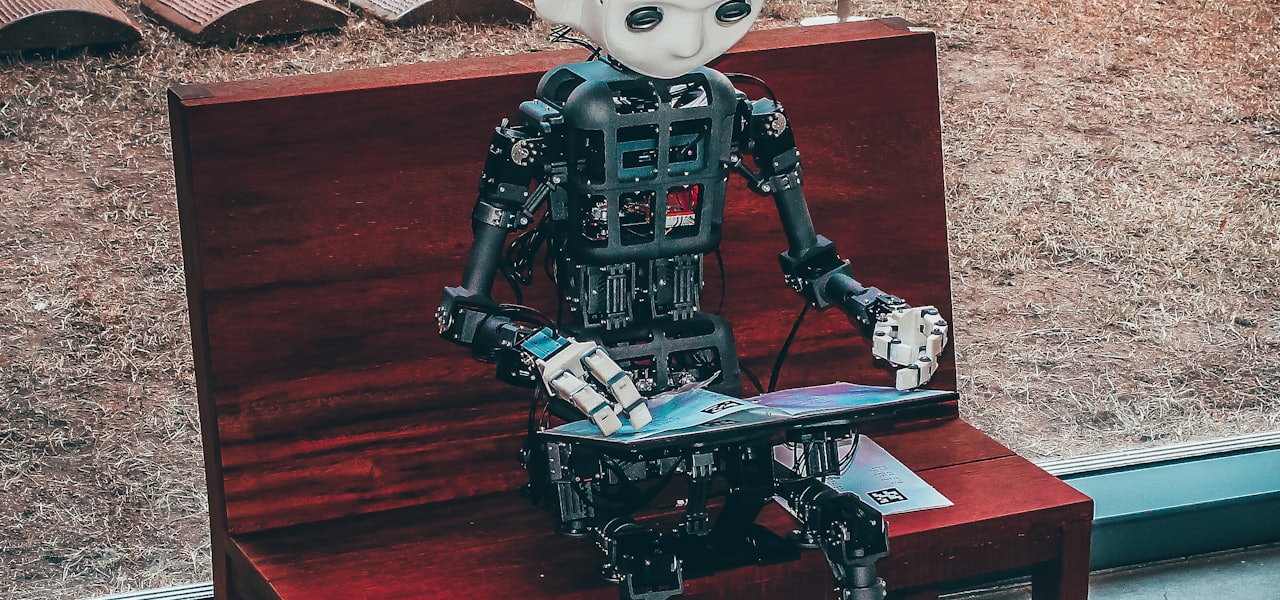
An electronic kit is a package of electrical components used to build an electronic device. Generally, kits are composed of electronic components, a circuit diagram (schematic), assembly instructions, and often a printed circuit board (PCB) or another type of prototyping board. There are two types of kits. Some build a single device or system. Other types used for education demonstrate a range of circuits. These will include a solderless construction board of some type, such as: Components mounted in plastic blocks with side contacts, that are held together in a base, e.g. Denshi blocks Springs on a card board, the springs trap wire leads, or component leads, such as Philips EE electronic experiment kits. These are a cheap and flexible option Professional type prototyping boards, (breadboards) into which component leads are inserted, following documentation of the "kit". The first type of kit for constructing a single device normally uses a PCB on which components are soldered. They normally come with extended documentation describing which component goes where into the PCB. For advanced hobby projects, sometimes the kit may only consist of a printed circuit board and assembly instructions, and the purchaser may have to source all the parts independently; or, the vendor may provide hard-to-get or pre-programmed parts while expecting the purchaser to obtain the rest of the components. People primarily purchase electronic kits to have fun and learn how things work. They were once popular as a means to reduce the cost of buying goods, but there is usually no cost saving in buying a kit today. Some electronic kits were assembled to make complete complex devices such as color television sets, oscilloscopes, high-end audio amplifiers, amateur radio equipment, electric organs, and even computers such as the Heathkit H-8, and the LNW-80. Many of the early microprocessor computers were sold as either electronic kits or assembled and tested. Heathkit sold millions of electronic kits during its 45-year history. Home assembly of common consumer electronics items no longer provides a cost advantage over commercially manufactured and distributed devices. People still build kits for custom devices and special-purpose electronics for professional and educational use and as a hobby. Also emerging is a trend to simplify the complexity by providing preprogrammed or modular kits often provided by many suppliers online. The fun and thrill of making your own electronics have shifted, in many cases, from easy-to-comprehend applications and analog devices to more sophisticated digital devices. == Examples == The Altair 8800 (the first home computer) was also sold as a kit, as were the MK14, Sinclair ZX80, Sinclair ZX81 and Acorn Atom computers. Many S-100 bus system cards were sold only as kits. Building a Robot kit, most often with a micro controller inside, is now in fashion.
EasyA
EasyA is a web3 technology company and education platform based in London (United Kingdom), founded in 2022 by Phil Kwok and Dom Kwok. EasyA was officially launched in 2022, focusing on web3 technologies. This community was influenced by the founders' experiences during the COVID-19 pandemic and early collaborations with universities and other educational institutions. Subsequently, the community was used as a foundation for developing Web3-related initiatives, including the organisation of EasyA's first Web3 hackathon in 2022. The EasyA app has over one million users and provides educational content on various blockchain technologies. EasyA Labs is a separate initiative focused on developing products intended to improve accessibility to cryptocurrency for a broader audience.
Spintronics
Spintronics (a portmanteau of spin transport electronics), also known as spin electronics, is the study of the intrinsic spin of the electron and its associated magnetic moment, in addition to its fundamental electronic charge, in solid-state devices. The field of spintronics concerns spin-charge coupling in metallic systems. The analogous effects in insulators fall into the field of multiferroics. Spintronics fundamentally differs from traditional electronics in that, in addition to charge state, electron spins are used as a further degree of freedom, with implications in the efficiency of data storage and transfer. Spintronic systems are most often realised in dilute magnetic semiconductors (DMS) and Heusler alloys and are of particular interest in the field of quantum computing, such as atomtronics computation. == History == Spintronics emerged from discoveries in the 1980s concerning spin-dependent electron transport phenomena in solid-state devices. This includes the observation of spin-polarized electron injection from a ferromagnetic metal to a normal metal by Johnson and Silsbee (1985) and the discovery of giant magnetoresistance independently by Albert Fert et al. and Peter Grünberg et al. (1988). The origin of spintronics can be traced to the ferromagnet/superconductor tunneling experiments pioneered by Meservey and Tedrow and initial experiments on magnetic tunnel junctions by Julliere in the 1970s. The use of semiconductors for spintronics began with the theoretical proposal of a spin field-effect-transistor by Datta and Das in 1990 and of the electric dipole spin resonance by Rashba in 1960. In 2012, persistent spin helices of synchronized electrons were made to persist for more than a nanosecond, a 30-fold increase over earlier efforts, and longer than the duration of a modern processor clock cycle. In 2025, at 60 K (−213.2 °C; −351.7 °F) crystalline nickel(II) iodide (NiI2) was reported to exhibit p-wave magnetism, in which the spins of nickel atoms became arranged in a spiral pattern in two orientations. The orientations can be switched via a small electrical current. Applied in digital devices, this spintronics behavior requires far less current than the conventional charge-based electronics that powers devices such as computers and phones. == Theory == The spin of the electron is an intrinsic angular momentum that is separate from the angular momentum due to its orbital motion. The magnitude of the projection of the electron's spin along an arbitrary axis is 1 2 ℏ {\displaystyle {\tfrac {1}{2}}\hbar } , implying that the electron acts as a fermion by the spin-statistics theorem. Like orbital angular momentum, the spin has an associated magnetic moment, the magnitude of which is expressed as μ = 3 2 q m e ℏ {\displaystyle \mu ={\tfrac {\sqrt {3}}{2}}{\frac {q}{m_{e}}}\hbar } . In a solid, the spins of many electrons can act together to affect the magnetic and electronic properties of a material, for example endowing it with a permanent magnetic moment as in a ferromagnet. In many materials, electron spins are equally present in both the up and the down state, and no transport properties are dependent on spin. A spintronic device requires generation or manipulation of a spin-polarized population of electrons, resulting in an excess of spin up or spin down electrons. The polarization of any spin dependent property X can be written as P X = X ↑ − X ↓ X ↑ + X ↓ {\displaystyle P_{X}={\frac {X_{\uparrow }-X_{\downarrow }}{X_{\uparrow }+X_{\downarrow }}}} . A net spin polarization can be achieved either through creating an equilibrium energy split between spin up and spin down. Methods include putting a material in a large magnetic field (Zeeman effect), the exchange energy present in a ferromagnet or forcing the system out of equilibrium. The period of time that such a non-equilibrium population can be maintained is known as the spin lifetime, τ {\displaystyle \tau } . In a diffusive conductor, a spin diffusion length λ {\displaystyle \lambda } can be defined as the distance over which a non-equilibrium spin population can propagate. Spin lifetimes of conduction electrons in metals are relatively short (typically less than 1 nanosecond). An important research area is devoted to extending this lifetime to technologically relevant timescales. The mechanisms of decay for a spin polarized population can be broadly classified as spin-flip scattering and spin dephasing. Spin-flip scattering is a process inside a solid that does not conserve spin, and can therefore switch an incoming spin up state into an outgoing spin down state. Spin dephasing is the process wherein a population of electrons with a common spin state becomes less polarized over time due to different rates of electron spin precession. In confined structures, spin dephasing can be suppressed, leading to spin lifetimes of milliseconds in semiconductor quantum dots at low temperatures. Superconductors can enhance central effects in spintronics such as magnetoresistance effects, spin lifetimes and dissipationless spin-currents. The simplest method of generating a spin-polarised current in a metal is to pass the current through a ferromagnetic material. The most common applications of this effect involve giant magnetoresistance (GMR) devices. A typical GMR device consists of at least two layers of ferromagnetic materials separated by a spacer layer. When the two magnetization vectors of the ferromagnetic layers are aligned, the electrical resistance will be lower (so a higher current flows at constant voltage) than if the ferromagnetic layers are anti-aligned. This constitutes a magnetic field sensor. Two variants of GMR have been applied in devices: Current-in-plane (CIP), where the electric current flows parallel to the layers and, Current-perpendicular-to-plane (CPP), where the electric current flows in a direction perpendicular to the layers. Other metal-based spintronics devices: Tunnel magnetoresistance (TMR), where CPP transport is achieved by using quantum-mechanical tunneling of electrons through a thin insulator separating ferromagnetic layers. Spin-transfer torque, where a current of spin-polarized electrons is used to control the magnetization direction of ferromagnetic electrodes in the device. Spin-wave logic devices carry information in the phase. Interference and spin-wave scattering can perform logic operations. == Device types == === Spintronic-logic === Non-volatile spin-logic devices to enable scaling are being extensively studied. Spin-transfer, torque-based logic devices that use spins and magnets for information processing have been proposed. These devices are part of the ITRS exploratory road map. Logic-in memory applications are already in the development stage. A 2017 review article can be found in Materials Today. A generalized circuit theory for spintronic integrated circuits has been proposed so that the physics of spin transport can be utilized by SPICE developers and subsequently by circuit and system designers for the exploration of spintronics for "beyond CMOS computing". === Semiconductor === Doped semiconductor materials display dilute ferromagnetism. In recent years, dilute magnetic oxides (DMOs) including ZnO based DMOs and TiO2-based DMOs have been the subject of numerous experimental and computational investigations. N`0 sources (like manganese-doped gallium arsenide (Ga,Mn)As), increase the interface resistance with a tunnel barrier, or using hot-electron injection. Spin detection in semiconductors has been addressed with multiple techniques: Faraday/Kerr rotation of transmitted/reflected photons Circular polarization analysis of electroluminescence Nonlocal spin valve (adapted from Johnson and Silsbee's work with metals) Ballistic spin filtering The latter technique was used to overcome the lack of spin-orbit interaction and materials issues to achieve spin transport in silicon. Because external magnetic fields (and stray fields from magnetic contacts) can cause large Hall effects and magnetoresistance in semiconductors (which mimic spin-valve effects), the only conclusive evidence of spin transport in semiconductors is demonstration of spin precession and dephasing in a magnetic field non-collinear to the injected spin orientation, called the Hanle effect. === Storage media === Antiferromagnetic storage media have been studied as an alternative to ferromagnetism, especially since with antiferromagnetic material the bits can be stored as well as with ferromagnetic material. Instead of the usual definition 0 ↔ 'magnetisation upwards', 1 ↔ 'magnetisation downwards', the states can be, e.g., 0 ↔ 'vertically alternating spin configuration' and 1 ↔ 'horizontally-alternating spin configuration'.). The main advantages of antiferromagnetic material are: insensitivity to data-damaging perturbations by stray fields due to zero net external magnetization; no effect on near particles, implying that antiferromagnetic device elements wo